Pennsylvania Rent Hike Legislation Stalled, Raising Risks for Manufactured Housing Communities
August 20, 2025
New Jersey Court Grants Summary Judgment to Pacific Asset Holdings, LLC in Contested Foreclosure Case
August 22, 2025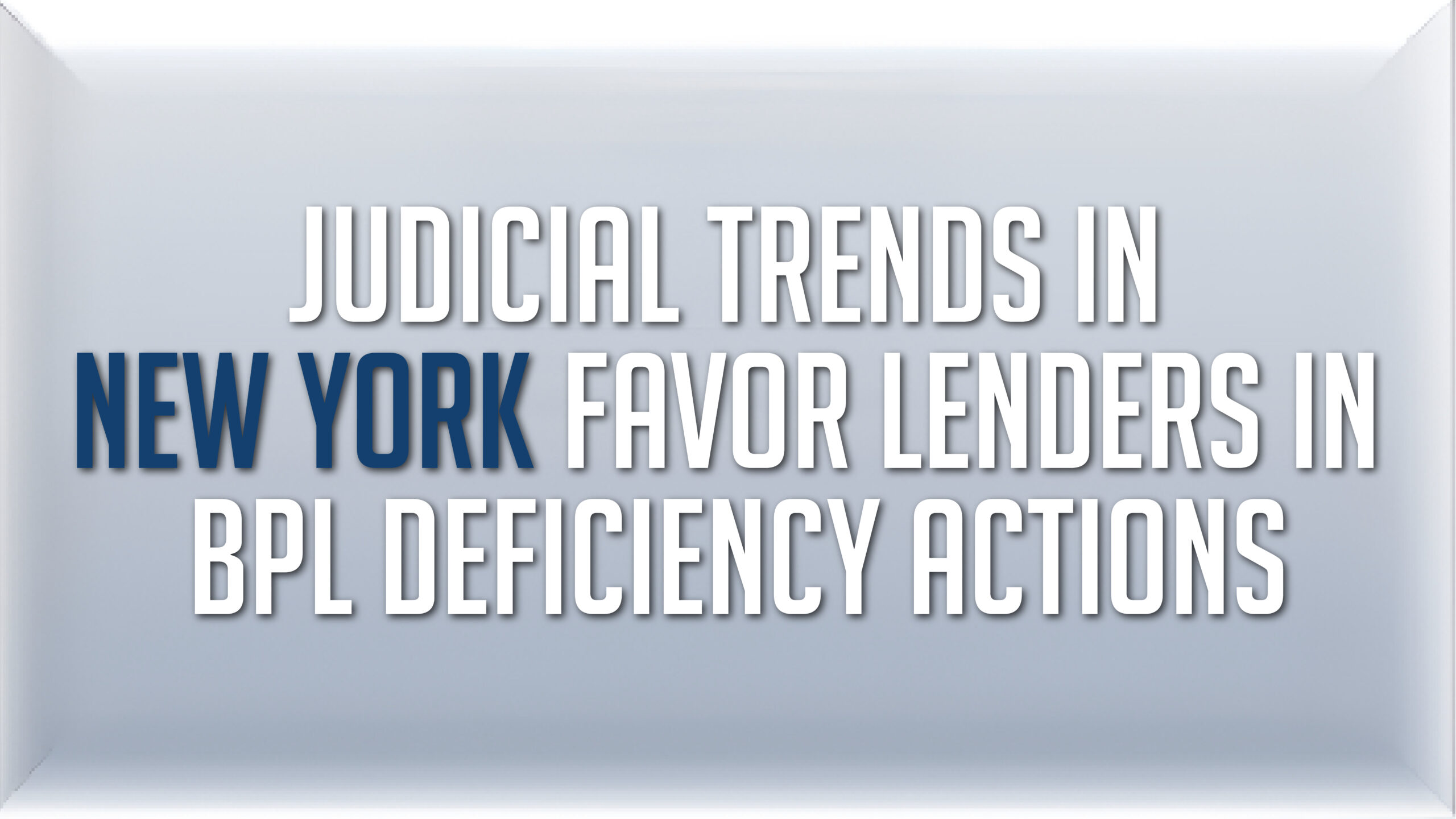
August 21st, 2025
Judicial trends show growing support for lenders pursuing deficiency judgments on business purpose loans (“BPLs”), highlighting recovery opportunities for servicers and lenders in the housing loan market. BPLs, used primarily for investment or rental property financing, do not fall under many consumer protections such as those in the Truth in Lending Act of 1968. As a result, borrowers cannot typically rely on anti-deficiency statutes for protection. Courts generally treat BPLs in the context of property financing and investments as commercial credit arrangements, which means lenders may pursue deficiency judgments following foreclosure. A deficiency judgment allows lenders to recover the shortfall between the foreclosure sale price and the outstanding loan balance, strengthening recovery prospects and limiting loss exposure. Recent judicial trends indicate that courts are consistently upholding lenders’ rights to pursue deficiency actions; this pattern signals favorable recovery outlook in BPL defaults.
As defaults rise in the housing loan market, courts are consistently affirming lenders’ rights to pursue deficiency judgments in BPL cases, especially when business intent was clearly documented at origination. For example, in First Commerce, LLC v. Jerath, 2024 NY Slip Op 03788 (3d Dep’t July 11, 2024), New York’s Third Department affirmed a lender’s right to a deficiency judgment where the motion was filed within 90 days of the foreclosure sale and properly served under RPAPL § 1371. This confirms a judicial preference for enforcing deficiency access when statutory conditions are satisfied. At the same time, older decisions such as Flushing Sav. Bank, FSB v. Bitar, 106 A.D.3d 690 (2d Dep’t 2013), serve as a reminder that courts scrutinize valuation evidence and compliance with statutory procedures. The case reinforces that while current trends favor lenders, successful recovery still depends on procedural precision and regulatory adherence. Servicers should prepare for increased deficiency-related activity in BPL portfolios, as courts continue to support lender recovery rights in these kinds of transactions so long as procedural steps are correctly followed.
DISCLAIMER
This publication may constitute attorney advertising under the laws and rules of professional conduct of one or more states. The information provided in this publication is for general informational purposes only and does not constitute legal advice. The contents are not intended to be a substitute for professional legal advice, consultation, or representation. No attorney-client relationship is formed by reading or relying on this publication. Prior results do not guarantee a similar outcome. Readers should consult a qualified attorney for advice regarding their individual circumstances or any specific legal questions they may have.
If you have questions about this publication, please contact Adam Friedman, Ralph Vartolo or Michael DeRosa,
Friedman Vartolo LLP, 1325 Franklin Avenue, Suite 160, Garden City, NY 11530, Phone: (212) 471-5100 | Fax: (212) 471-5150.