San Pablo Expands Just Cause Eviction Protections and Relocation Requirements Effective April 1, 2026
April 7, 2026
Mamdani’s First 100 Days: Status of New York City Housing Initiatives
April 16, 2026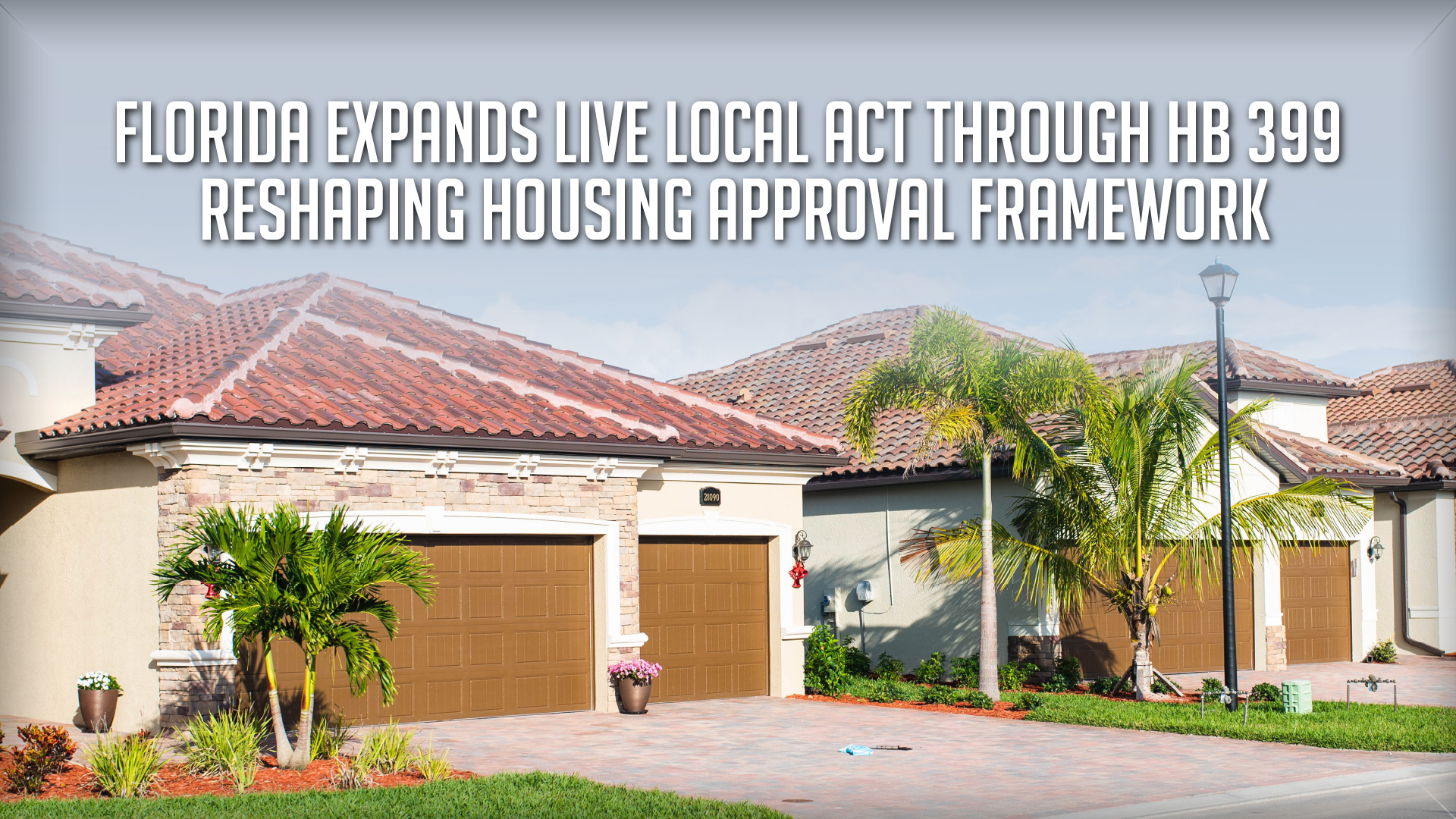
April 14, 2026
A newly enacted Florida law expands the existing Live Local Act and introduces changes to how housing developments are reviewed and approved across the state. The law, signed by the Governor on March 27, 2026, limits the ability of local governments to reject qualifying housing projects, requires written findings for denials, and allows administrative fees only to the extent they reflect actual costs. The law also expands placement options for manufactured housing and may accelerate permitting timelines. The legislation is reflected in Florida House Bill 399 (2026) (“HB 399”). HB 399 serves as a primary source outlining these changes and creating the statutory framework behind the reporting. For servicers and investors, the law may create practical considerations tied to distressed asset strategy, redevelopment timing, and the marketability of certain properties where local approval risk previously affected disposition planning.
Local officials and stakeholders raise concerns about reduced local authority over zoning and land use decisions. Critics state that limiting denials based on compatibility and requiring written justifications constrains local discretion and moves the decision-making toward the state. Supporters maintain that these provisions address housing affordability by reducing delays and barriers to development.
For mortgage servicers, a more predictable approval process may affect loss mitigation strategies tied to REO assets and distressed collateral. Properties that previously faced zoning or permitting delays may now move more quickly through redevelopment or resale channels, which may reduce hold times and carrying costs. For investors, particularly those acquiring distressed or underperforming assets, the expanded ability to develop or repurpose properties may alter underwriting assumptions tied to exit strategies, including valuation upside and time to stabilization.
DISCLAIMER
This publication may constitute attorney advertising under the laws and rules of professional conduct of one or more states. The information provided in this publication is for general informational purposes only and does not constitute legal advice. The contents are not intended to be a substitute for professional legal advice, consultation, or representation. No attorney-client relationship is formed by reading or relying on this publication. Prior results do not guarantee a similar outcome. Readers should consult a qualified attorney for advice regarding their individual circumstances or any specific legal questions they may have.
If you have questions about this publication, please contact Adam Friedman, Ralph Vartolo or Michael DeRosa,
Friedman Vartolo LLP, 1325 Franklin Avenue, Suite 160, Garden City, NY 11530, Phone: (212) 471-5100 | Fax: (212) 471-5150.