New York Bills A07546 and S6971 Propose New Pleading Standards and Recovery Limits for Junior Lien Enforcement
March 18, 2026
New York Enacts S.8768 Clarifying Mortgage Discharge and Payoff Acceptance Rules
March 23, 2026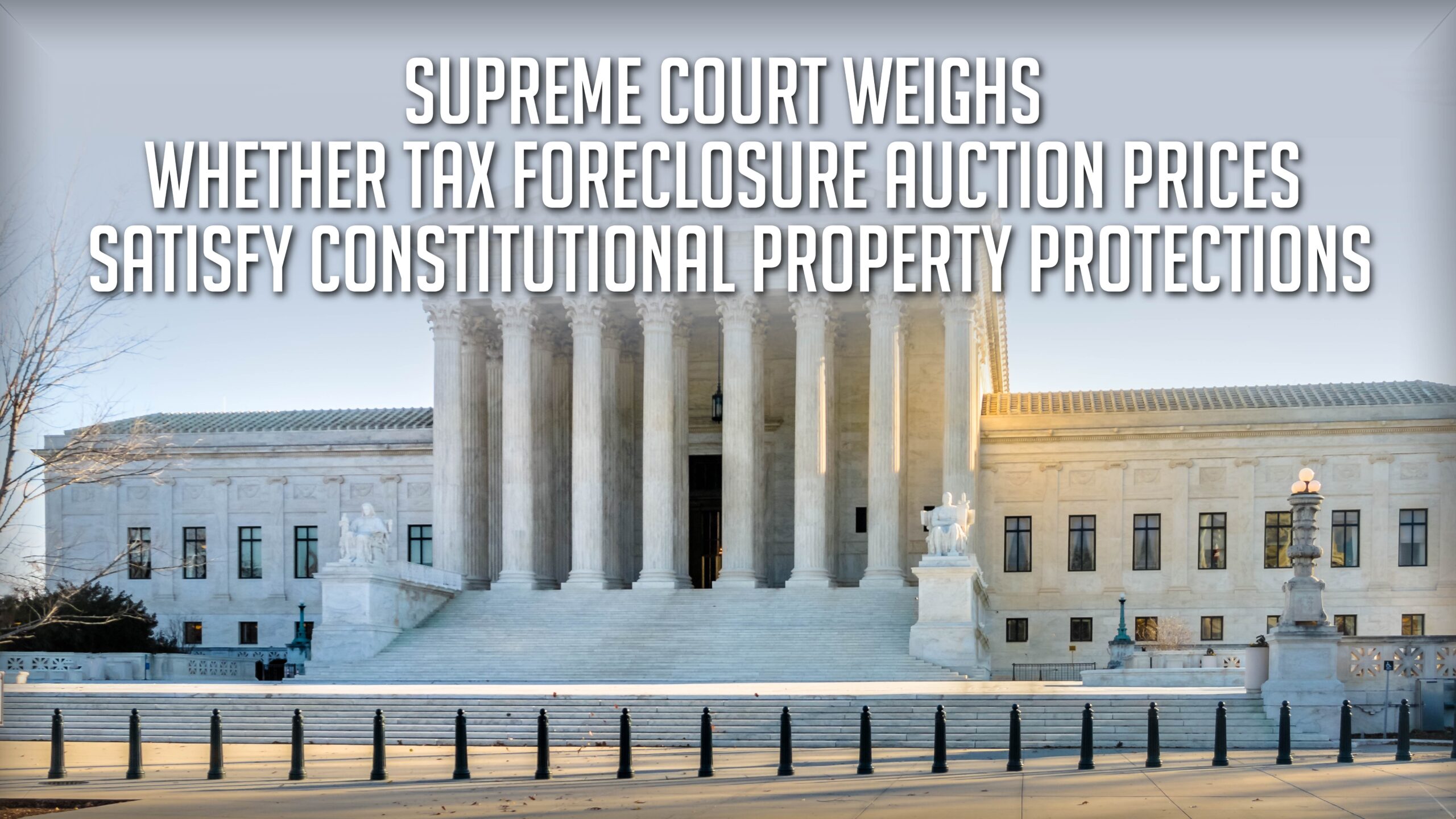
March 20, 2026
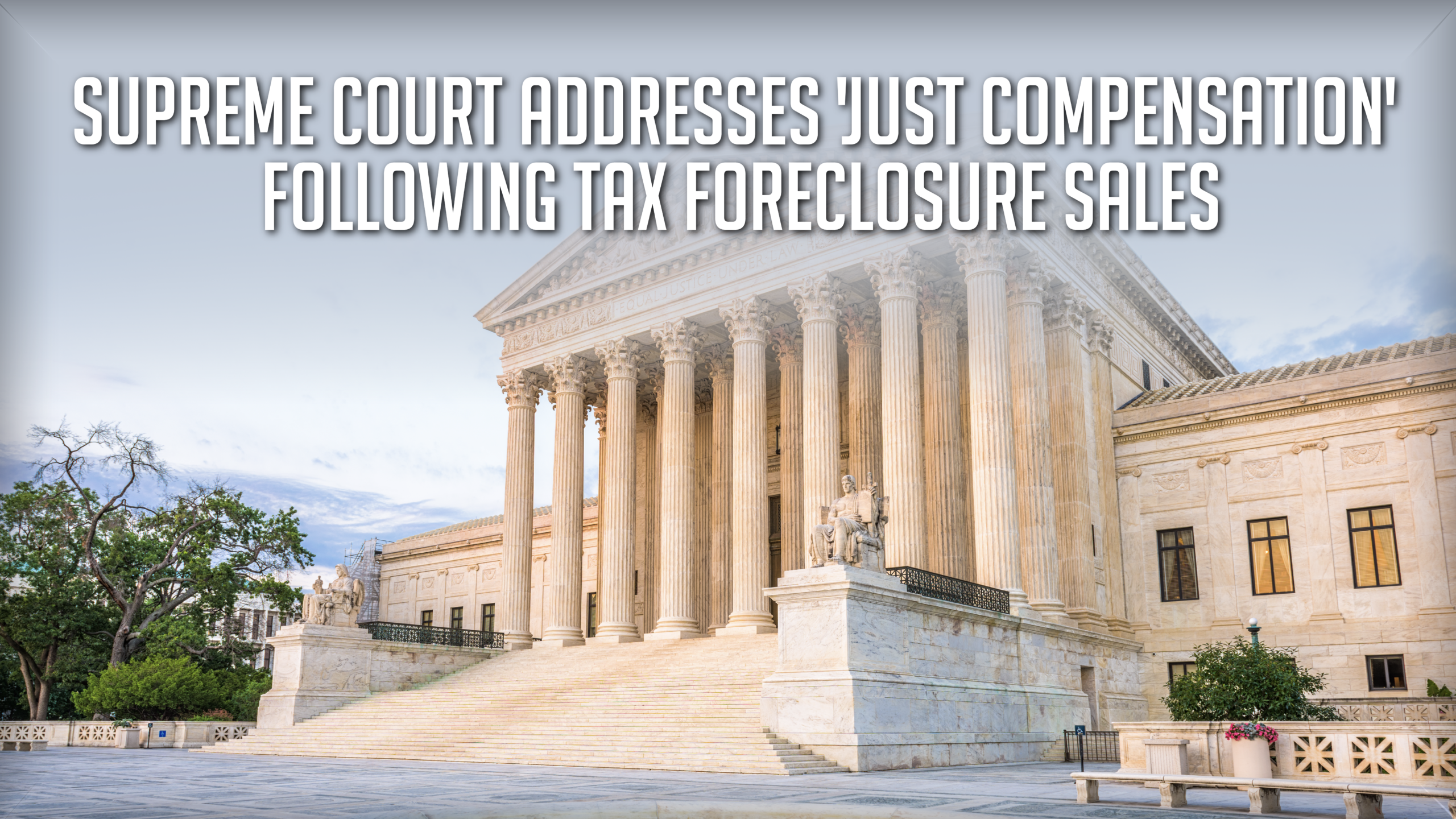
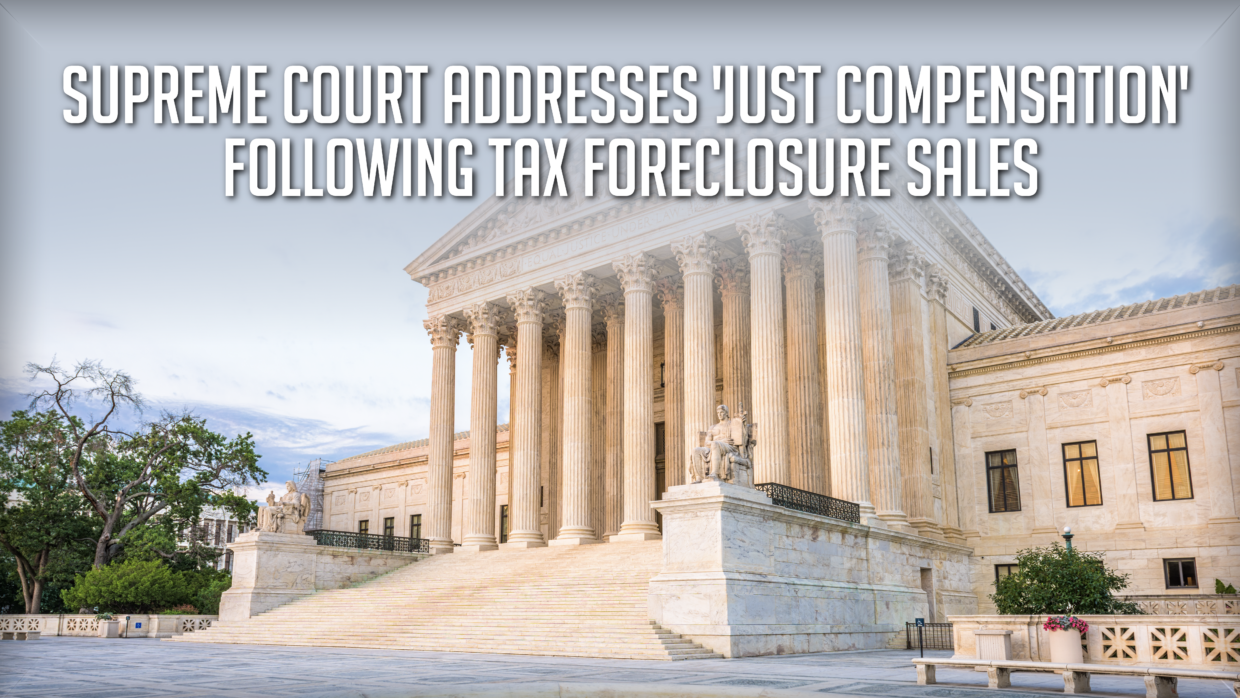
On Wednesday, February 25, 2026, the United States Supreme Court heard oral arguments in a case examining the constitutional limits of government tax foreclosure practices. NPR reports that the dispute arose from a Michigan tax foreclosure in which a county seized a home after roughly $2,000 in unpaid property taxes remained outstanding. The county later sold the property at auction for approximately $76,000 and returned the proceeds to the homeowner’s estate after deducting the delinquent taxes, interest, and related costs. Property owners argue that the Constitution requires compensation tied to the property’s fair market value rather than the amount generated through a tax foreclosure auction. The dispute therefore asks whether the Constitution permits governments to rely on the price produced by a tax foreclosure auction when that price falls below the property’s fair market value.
Several justices appeared divided during oral arguments on whether the foreclosure auction process provides a constitutionally adequate measure of property value. Some justices suggested that property owners who fail to pay delinquent taxes should not later challenge the results of an auction conducted under state law. Other justices raised concerns that relatively small tax debts could lead to the loss of substantial home equity if properties sell for depressed prices at foreclosure auctions. Government attorneys warned that a rule requiring compensation tied to fair market value could disrupt tax foreclosure systems used by states and local governments to collect delinquent property taxes. The Court’s decision will determine whether auction prices alone satisfy constitutional protections when governments seize and sell property through tax foreclosure.
https://www.npr.org/2026/02/25/nx-s1-5726382/supreme-court-appears-split-in-tax-foreclosure-case
DISCLAIMER
This publication may constitute attorney advertising under the laws and rules of professional conduct of one or more states. The information provided in this publication is for general informational purposes only and does not constitute legal advice. The contents are not intended to be a substitute for professional legal advice, consultation, or representation. No attorney-client relationship is formed by reading or relying on this publication. Prior results do not guarantee a similar outcome. Readers should consult a qualified attorney for advice regarding their individual circumstances or any specific legal questions they may have.
If you have questions about this publication, please contact Adam Friedman, Ralph Vartolo or Michael DeRosa,
Friedman Vartolo LLP, 1325 Franklin Avenue, Suite 160, Garden City, NY 11530, Phone: (212) 471-5100 | Fax: (212) 471-5150.