Connecticut SB00257 Proposes Just Cause Eviction Requirements for Certain Tenants
March 16, 2026
Supreme Court Weighs Whether Tax Foreclosure Auction Prices Satisfy Constitutional Property Protections
March 20, 2026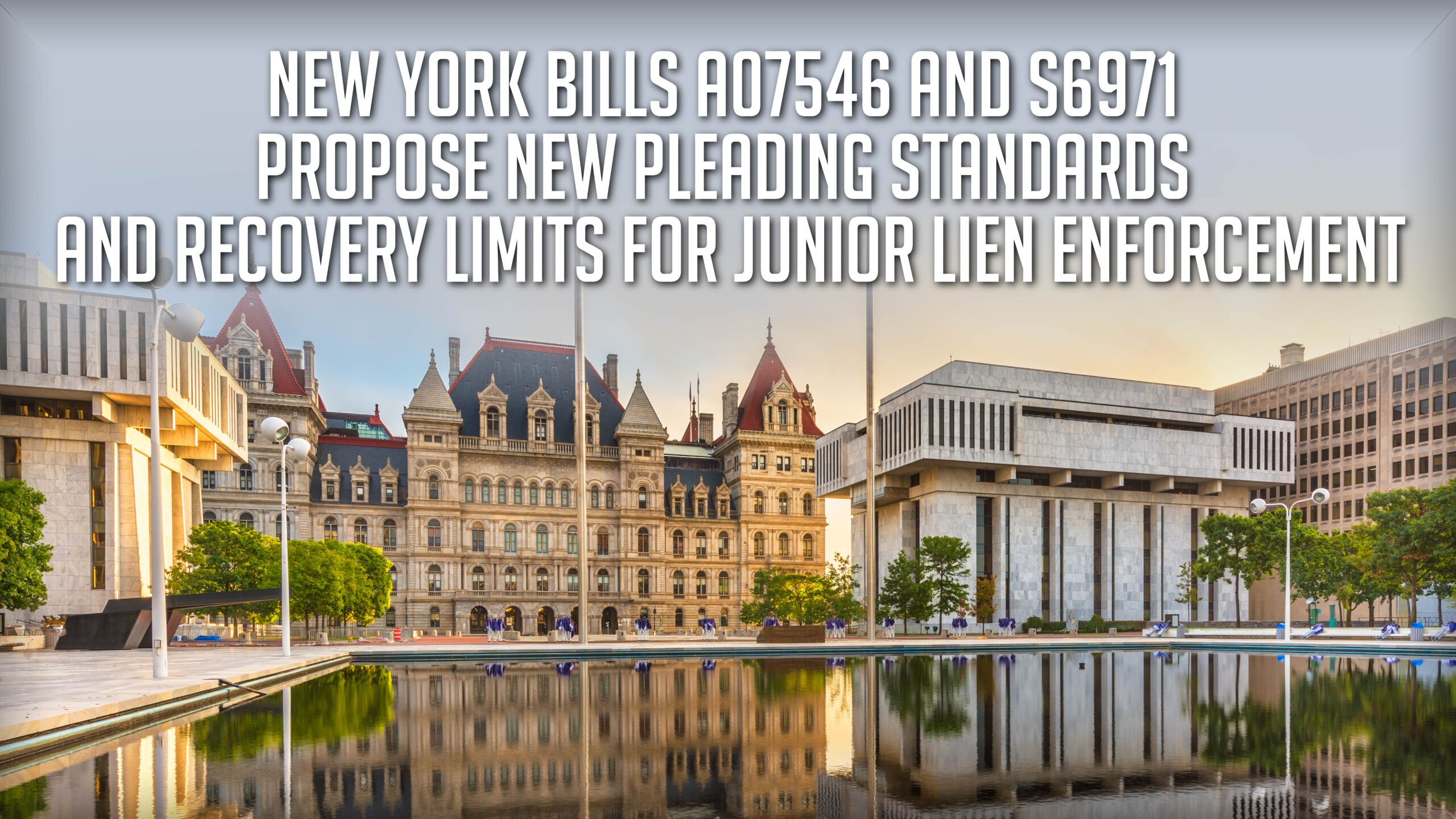
March 18, 2026
New York (“NY”) A07546 and its Senate companion, New York S6971 (“S6971”), address actions on subordinate bonds or notes, including junior liens and second mortgages, in foreclosure and debt collection proceedings, and include a stated focus on so called “zombie” second mortgages. The bills propose amendments (to the Real Property Actions and Proceedings Law and the Civil Practice Law and Rules) that impose additional pleading requirements in actions involving subordinate debt. The bills also establish a specific statute of limitations for certain subordinate obligations purchased after default. S6971 also includes provisions that require all lien holders to be named as necessary and indispensable parties in foreclosure actions involving subordinate debt and limit recovery in specified subordinate lien actions to the amount paid to acquire the loan. Although the legislation is often framed as targeting dormant or “zombie” second mortgages, the broader provisions may carry greater significance for senior lien holders and mortgage servicers because first liens represent far larger balances and a substantially greater share of the mortgage market in New York. As a result, restrictions on the enforcement and recovery of subordinate debt may affect lien priority dynamics, portfolio valuations, and loss mitigation decisions for servicers managing first lien loans. If enacted, these companion bills would change both the procedural requirements and the recovery parameters governing enforcement of junior liens in New York.
The bills require a plaintiff bringing an action on a subordinate bond or note to plead the date of acquisition, the amount paid for the loan, the chain of title, and the payment history. The legislation establishes a defined statute of limitations for certain purchased subordinate obligations. For loan servicers managing junior lien portfolios or charged off second mortgages, these provisions affect complaint drafting standards, enforcement timelines, party joinder obligations, and potential recovery expectations in litigation.A statute of limitations tied to acquisition timing and a recovery limitation tied to purchase price alter the legal framework governing enforcement of subordinate debt. As of early 2026, both bills remain active and have not been enacted into law.
DISCLAIMER
This publication may constitute attorney advertising under the laws and rules of professional conduct of one or more states. The information provided in this publication is for general informational purposes only and does not constitute legal advice. The contents are not intended to be a substitute for professional legal advice, consultation, or representation. No attorney-client relationship is formed by reading or relying on this publication. Prior results do not guarantee a similar outcome. Readers should consult a qualified attorney for advice regarding their individual circumstances or any specific legal questions they may have.
If you have questions about this publication, please contact Adam Friedman, Ralph Vartolo or Michael DeRosa,
Friedman Vartolo LLP, 1325 Franklin Avenue, Suite 160, Garden City, NY 11530, Phone: (212) 471-5100 | Fax: (212) 471-5150.