Appellate Court Rejects Defendant’s Attempt to Set Aside Default in Business Purpose Foreclosure
July 17, 2025
Friedman Vartolo wins 2025 ALFN Member Service Award
July 29, 2025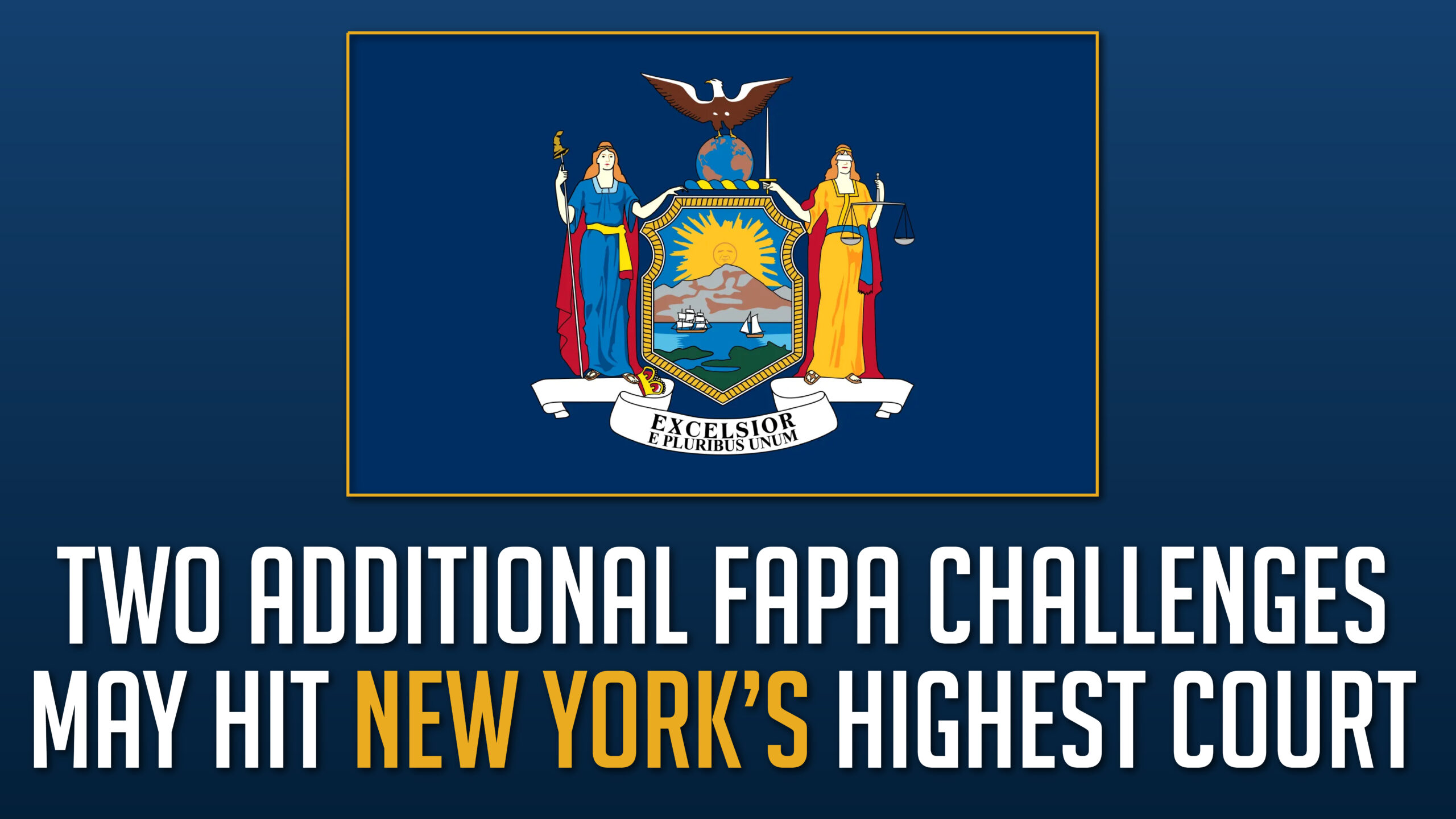
In these two foreclosures impacted by the Foreclosure Abuse Prevention Act (“FAPA”), the plaintiff-appellant filed appeals to New York’s highest appellate court, the Court of Appeals.
In Deutsche Bank v. Dagrin and FV-1 Inc. v. Palaguachi, the Appellate Division, Second Department applied FAPA amendments in an indefinitely retroactive manner to dismiss foreclosures with prejudice as time-barred. In doing so, the Appellate Division retrospectively applied FAPA’s CPLR §203(h) and §3217(e), which, among other things, prevent a lender from revoking an acceleration or resetting the six year limitations period to foreclose by a notice or voluntary discontinuance of a foreclosure.
In doing so, the Second Department rejected the foreclosing plaintiffs’ contentions that FAPA should not be applied retroactively based on the statutory text, which the appellate court disagreed with based on its opinion that “FAPA is remedial in nature, and applying FAPA retroactively effects its beneficial purpose.” The Appellate Division also rejected the plaintiffs’ contention that the retroactive application of FAPA violated the due process and contracts clauses of the United States Constitution.
The plaintiffs took these appeals based on the position that the dismissal orders appealed from finally determined the actions within the meaning of the New York Constitution (which is a jurisdictional requirement to appeal to the State’s highest court) and that a substantial constitutional question was directly involved in the dismissal orders. The Court of Appeals has authority to dismiss the appeals on its own for lack of subject matter jurisdiction, if it disagrees that a substantial constitutional question was involved in the FAPA-based dismissals. If the Court of Appeals agrees that it has jurisdiction then the plaintiffs will be required to file opening appellant briefs by approximately mid-September, response briefs will be due 45 days thereafter, and appellant’s reply brief will be due 15 days from when the reply is due.
These are two appeals to monitor, because there is no appeal pending before the State’s highest court concerning the constitutionality of the retroactive application of the FAPA retroactive statutory prohibitions on unilateral deceleration. The two pending appeals before the Court of Appeals (Article 13 LLC v. Ponce De Leon Bank and Van Dyke v. U.S. Bank) concern FAPA’s “quiet title action” estoppel statute CPLR §213(4)(b). The firm will continue to provide updates on these potentially impactful appeals if they proceed to the briefing stage, or are dismissed by the Court of Appeals.
DISCLAIMER
This publication may constitute attorney advertising under the laws and rules of professional conduct of one or more states. The information provided in this publication is for general informational purposes only and does not constitute legal advice. The contents are not intended to be a substitute for professional legal advice, consultation, or representation. No attorney-client relationship is formed by reading or relying on this publication. Prior results do not guarantee a similar outcome. Readers should consult a qualified attorney for advice regarding their individual circumstances or any specific legal questions they may have.
If you have questions about this publication, please contact Adam Friedman, Ralph Vartolo or Michael DeRosa,
Friedman Vartolo LLP, 1325 Franklin Avenue, Suite 160, Garden City, NY 11530, Phone: (212) 471-5100 | Fax: (212) 471-5150.