A Reminder: NYC Lead Inspection Compliance for Landlords
August 7, 2025
Safety from Wire fraud with Tyler Adams of CertifID
August 8, 2025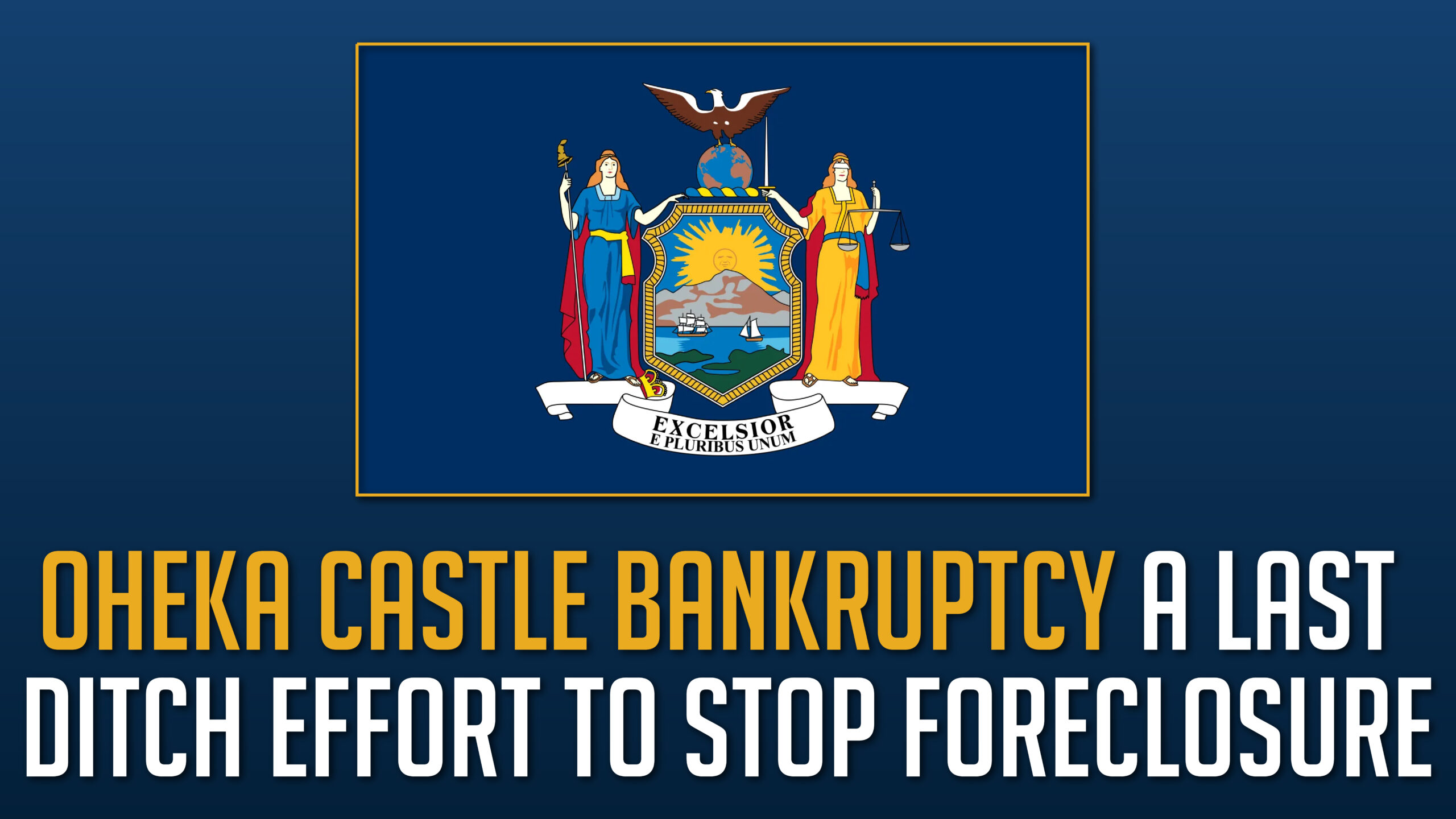
On July 31, 2025, Gary Melius, through his entity Khan Property Owner, LLC, filed for Chapter 11 bankruptcy protection to delay the foreclosure sale of Oheka Castle in Long Island, NY. The filing reveals $63 million in debt set against $92.8 million in assets – the majority of which consists of the iconic 22-acre Huntington estate. This bankruptcy emphasizes the ongoing risks for lenders in managing distressed real estate – especially when complex legal maneuvers like Chapter 11 filings are used to delay foreclosure and complicate asset recovery.
The financial issues surrounding the property stem from Melius’s default on a $28 million commercial mortgage-backed securities (CMBS) loan more than a decade ago. The debt ballooned to approximately $50 million due to accrued interest and advances. In 2023, Taconic Capital, through its entity 135 W. Gate Drive LLC (“Taconic”), triggered foreclosure proceedings when it acquired the defaulted mortgage note for $25 million. At the time, Melius suggested that filing for Chapter 11 bankruptcy protection could provide a legal safe harbor to protect his plans for revitalizing the property. As he told Long Island Business News in March 2023, “I held them up for seven years. Now they got a victory in court, but I’ve made a motion to re-argue so that’s going to take a while. Then, my next move is, I will go through Chapter 11, and they’ll take three or four more years to get it, if they ever got it.” His strategy proved seemingly effective, as the bankruptcy filing delayed the foreclosure sale via public auction originally scheduled for August 7, 2025.
Oheka Castle, once a premier wedding and event venue, entered receivership in 2019. Melius purchased the property in 1984 and invested $46 million in its restoration but, unfortunately, the financial difficulties continued to escalate. Due to its complex history, it appears that neither the property’s significant historical value nor market value reduce the obstacles for the lenders trying to recover funds tied to the castle.
For lenders, particularly those involved in situations where legal complexities may prolong the resolution process, the Oheka Castle case demonstrates the need for thorough due diligence and proactive management of distressed assets. As bankruptcy proceedings unfold, lenders exposed to distressed assets like Oheka Castle are urged to maintain, among other things, (1) strong risk management practices, (2) safeguards against potential delays in recovery, and (3) comprehensive evaluations of all available strategies to preserve value and protect their interests.
DISCLAIMER
This publication may constitute attorney advertising under the laws and rules of professional conduct of one or more states. The information provided in this publication is for general informational purposes only and does not constitute legal advice. The contents are not intended to be a substitute for professional legal advice, consultation, or representation. No attorney-client relationship is formed by reading or relying on this publication. Prior results do not guarantee a similar outcome. Readers should consult a qualified attorney for advice regarding their individual circumstances or any specific legal questions they may have.
If you have questions about this publication, please contact Adam Friedman, Ralph Vartolo or Michael DeRosa,
Friedman Vartolo LLP, 1325 Franklin Avenue, Suite 160, Garden City, NY 11530, Phone: (212) 471-5100 | Fax: (212) 471-5150.